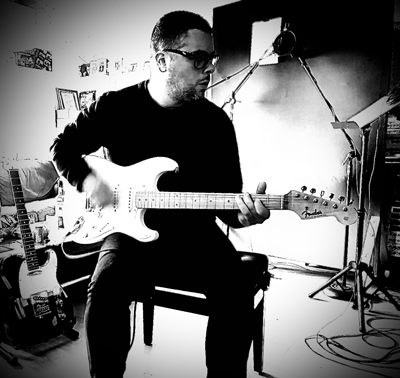
‘I always try to write with unflinching honesty – it’s quite therapeutic to be honest’

Matt McManamon
Matt McManamon

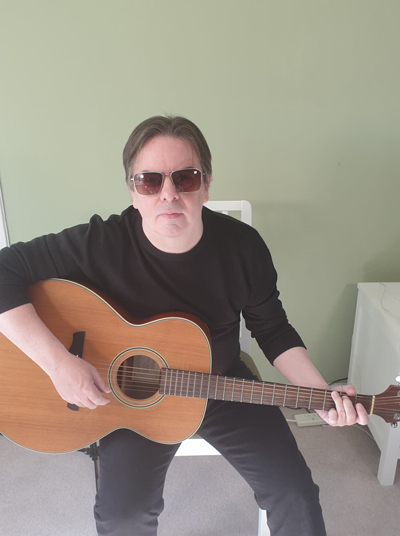
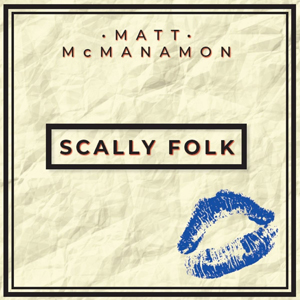
One of Say It With Garage Flowers’ favourite albums of the year so far is Scally Folk – the debut solo record by Matt McManamon, the former frontman of noughties Scouse ska-punkers The Dead 60s.

Don’t expect to be skanking to it, though – his first release in 13 years, it’s a strong collection of reflective and autobiographical songs that are steeped in the tradition of Irish folk music – Liverpool-born McManamon’s family are from County Mayo – as well as the jangly Scouse indie sound of The La’s, and the Wirral psych-pop of The Coral, who were former Deltasonic label mates of The Dead 60s.

McManamon’s new single, Mulranny Smile, is a haunting, folky ballad that’s shrouded in Celtic sea mist, and if Lee Mavers had had tunes like What About You?, Out Of Time and Every Time I Close My Eyes up his sleeve, that second La’s album might’ve actually come out and been another classic.

“Traditional Irish folk, Scouse power-pop, classic ‘90s indie, West Coast American pop-punk and Americana have all influenced this record greatly,” McManamon tells us, in an exclusive interview.

“I think anyone who is aware of my musical past, and the type of music I have been previously associated with, will definitely be surprised, but I’m fairly confident it will be a welcome one.”

Q&A

Where are you and how’s it going?

Matt McManamon: I divide my time between the west coast and east coast of Ireland, but today I’m currently on the east coast in County Wexford. And it’s all going mightily.

You’re just about to release your debut solo album, Scally Folk, which is your first new music since your previous band, The Dead 60s, split up in 2008. What have you been up to since then and why has it taken 13 years to put a record out? Did you give up on music?

MM: Quite soon after The Dead 60s split, I moved back to my family’s ancestral home, in Ireland, and have been here ever since. I wouldn’t say I gave up on music, but I definitely did take a somewhat unwanted hiatus. I was always chipping away behind the scenes, and attempting various musical projects and activities, but, to be honest, they never came to fruition and barely made it out of the bedroom. That was largely down to confidence issues, which stemmed from The Dead 60s being dropped. I was definitely suffering from two issues in particular: fear of failure and fear of completion.

Through lack of confidence, I was unable to get anything over the finish line. I did, however, avail of the wonderful opportunity that was presented to me a few years back, when I was asked to join The Specials, as a live touring guitarist. That proved to be the first step in me re-finding my confidence and passion for music. It was a long slow process, but I’m pleased to tell you, I’m now firing on all cylinders again.

‘I wouldn’t say I gave up on music, but I definitely did take a somewhat unwanted hiatus’

Scally Folk took 13 years to come out, but only 14 days to record. How were the recording sessions at the Transmission Rooms studio in Drumlish, County Longford, Ireland?

MM: The sessions were wonderful – extremely productive. The studio itself is a great place to work and to get creative. Confidence was high and the results were achieved effortlessly.
Mick Cronin (Shane MacGowan, Kodeline) produced the record. How was it working with him? What did he bring to the process?

MM: Mick is a dear friend of mine – we’ve known each other for many years. I definitely had a firm idea and vision of how I wanted it to sound, and, in truth, we achieved it and more. It’s fair to say it eclipsed my expectations.

This was down to the invaluable input and musicianship – not only from Mick, but also from guitarist Vinny Redmond, bassist Enda Mulloy, keyboardist Dave Cox, multi-instrumentalist Kane O’Rourke, and whistle and box player, Andy Nolan. All of those people massively helped to shape the vision and sound of the songs.

Did Covid-19 affect your recording plans?

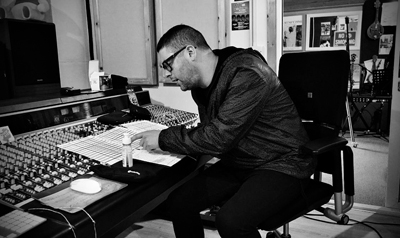
MM: We started the record on July 2 2020, which also happens to be my birthday. I took that as a great omen. In-between lockdown and travel restrictions, due to Covid-19, we did four sessions, lasting three days each, and then a final two days to put it to bed. That accumulated to 14 days’ total recording. It was all signed off, fully recorded, mixed and mastered by November 2020.
 

‘We started the record on July 2 2020, which is my birthday. I took that as a great omen’

One of my friends, singer-songwriter, John Murry, sings backing vocals on the album. How did you hook up with him?

MM: John just happened to be hanging around the studio, as he had recently completed a session there himself. We quite quickly hit it off, and we have become good friends. We regularly hang out and have some wicked conversations about music. He was highly enthusiastic and complimentary about my songs, as I am of his, so it just made sense to get him singing backing vocals on the album. I asked and he agreed – job done!

The record has Irish and Liverpudlian influences – trad folk and psych-power-pop. There’s a big nod to your roots, isn’t there?

MM: Yes – 100 per cent. I grew up in south Liverpool, in an Irish family that stems from County Mayo. I’ve always considered myself Liverpool-Irish, or Scouse-Irish, and I was very keen to get that point across on the record.

Liverpool power-pop and traditional Irish folk music, have, from an early age, been a great influence on me. I wanted to reflect that in the songs musically and lyrically, which I think I’ve managed to successfully do. I love the idea of flying the flag for Liverpool and Ireland. Hopefully that comes across.

The songs are autobiographical, aren’t they?

MM: Yes – everything I write about is something I’ve done, seen, or experienced. I always try to write with unflinching honesty and, in part, write about difficult subjects or situations that life has a habit of throwing at us. It’s quite therapeutic to be honest.

‘Liverpool power-pop and traditional Irish folk music, have, from an early age, been a great influence on me’

What’s your songwriting process?

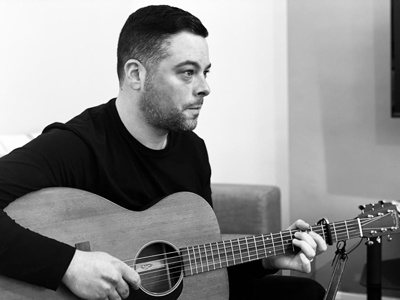
MM: I write the songs at home on acoustic guitar, and once the general structure and blueprint is in place, I then bring it to my dear friend, guitarist and musical partner in crime, Vinny Redmond. We then set about finessing the songs by coming up with extra melodies, guitar parts and backing vocals. Lastly, they’re then brought to the wider group of musicians, before we set about recording them.
Were any of the songs old ones, or did you write them all for this album?

MM: There was a mixture of both. There are a couple of songs that were first written approximately 13 years ago, after the dissolution of The Dead 60s, yet there are also songs that were written literally a week before I commenced recording.

I tend not to ‘try’ and write songs – when they come to me, they come to me. The second album is already written and has been partially demoed. As bizarre as this may sound, I never once sat down to ‘write’ the second album. The songs just came out of me super-quick and with the utmost of ease.

What were your main influences for this album musical, or otherwise?

MM: Geographically speaking, Liverpool and Ireland are huge influences, as well as personal life experience. Musically speaking, traditional Irish folk, Scouse power-pop, classic ‘90s indie, West Coast American pop-punk and Americana have all influenced this record greatly.

‘The second album is already written.The songs just came out of me super-quick and with the utmost of ease’

Do you think the record will surprise people?

MM: I think anyone who is aware of my musical past, and the type of music I have been previously associated with, will definitely be surprised, but I’m fairly confident it will be a welcome one.

Tell me about the title of the album. It has a nice double meaning…

MM: The title came out of a conversation I had with Mick Cronin, when I started doing music professionally again. I would find myself constantly being asked, “What does it sound like?” I always struggled to give any kind of definitive answer.

One day, Mick said to me: “It’s dead easy – it sounds like scally folk”, and with that, not only did I have an album title, but quite possibly a new genre of music. I particularly liked the way it also gave a firm nod to my Liverpool-Irish roots.

Let’s talk about some of the songs on the record. What can you tell me about the first track, Gaslighting? It has some faint echoes of ska – a nod to your Dead 60s – past, doesn’t it?

MM: Yes it does, but that came about by accident. I’d initially intended that song to have a more straight-ish ‘indie’ feel to it, but once we started laying it down in the studio, Vinny came up with the idea of setting off a counter offbeat rhythm to my rhythm guitar, and it just worked fabulously.

I think that throughout the record there are some subconscious nods to The Dead 60s. That was never my intention, but The Dead 60s was a big part of me and who I am, so it stands to reason that hints of the past would invariably seep through.

What about the new single, Mulranny Smile? What can you tell me about that? It has a traditional Irish folk feel. What inspired it?

MM: Mulranny Smile is a dreamy, pure Celtic soul tribute to my grandfather, which also gives a firm nod to a place I came to call home – the picturesque coastal village of Mulranny. Anyone who knows me will tell you of my love for the west coast of Ireland and County Mayo, so the goal was also to immortalise the place in a song.

The song Liberty Shore is in a similar folky vein, isn’t it?

MM: Yes – it has a similar vibe. That song is actually about leaving London for a better future. It’s definitely inspired by some of the great Irish emigrant folk songs that I would’ve heard constantly as a youngster.

One of my favourite songs on the record is Out Of Time. It has a power-pop feel and a big, infectious chorus. I think there’s a La’s and Coral sound to it too. Jumpin’ The Gun comes from a similar place, doesn’t it, as does Every Time I Close My Eyes. I really like the sound of those songs – they’re great, melodic, jangly guitar pop.

MM: Out Of Time was one of the first songs to really spring into life while recording Scally Folk. It was originally intended to sound like a gypsy-esque folk song, but it took on a new lease of life – especially once we cranked up the guitars. It organically morphed into a Liverpool power-pop monster, as did Jumpin’ The Gun.


Every Time I Close My Eyes came out exactly how I envisaged it. Being likened to The Coral or The La’s is definitely no bad thing – it’s something I welcome. And, of course, The Coral were my old label mates.

Here Comes The Fear could be a prequel to There Goes The Fear by Doves, couldn’t it?

MM: That song was actually my attempt to sound like Simon & Garfunkel – again it just organically grew during the recording process. It actually did play on my mind that the title was similar to the Doves song, but musically it isn’t, so I quickly put that out of mind.

I’m a big fan of Doves – they’re a great band. I really wanna catch then live soon, or, better still, I’d love to support them. If any members of Doves happen to read this, I’d just like to let you know that I’m here and I’m available. Ha-ha.

Any plans to play live this year? 

MM: Yes, there’s going to be a small UK tour in November – details to come very soon, I’m just in the process of getting it all signed off.

There may well be something a little sooner this year, but it’s still too early for me to book anything with confidence, especially as Covid and Brexit seems to have worked a number on the live music scene.

What music – new and old – are you enjoying at the moment?

MM: Fontaines D.C., DMA’s, John Murry, Jagged Baptist Club, Paul Westerberg, and John McGlone and The Souls Of Emotion.

Can you recommend some other ‘scally folk’ to me? Music and/ or people?

MM: There’s nobody, to my knowledge, doing ‘scally folk’. It’s something that my crew and me have invented. I am the original and best scally folker. Ha-ha-ha.

‘One memory that springs to mind is meeting and hanging out with Paul McCartney in the studio, in New York, while we were recording our second album. That was pretty surreal’

A lot of bands from the era of The Dead 60s are reforming? Were you not tempted?

MM: At this moment in time, I’m too busy doing my solo stuff. I always say ‘never say never’ but, in all honesty, I can’t see it ever happening. The past is the past. Onwards & upwards – the future is scally folk.

Finally, any memories – good or bad – from your time in The Dead 60s that you can share?

MM: I have absolutely tons of good memories. One that springs to mind is meeting and hanging out with Paul McCartney in the studio, in New York, while we were recording our second album. That was pretty surreal. But, honestly, there are so many. I’d have to put them down in a book

‘A book?’ you say. Funny that!  I’ve been writing my memoirs and it’s very close to completion. It’s called: Giz A Gig… A Personal Journey Through The Liverpool Music Scene & Beyond. I’m hoping to get it published in the very near future. Watch this space.

Matt McManamon’s new single, Mulranny Smile, is out now on Fretsore Records. The album, Scally Folk, will be released on May 28.

https://mattmcmanamon.bandcamp.com/album/scally-folk

https://www.fretsorerecords.com/
 

‘Death has occupied my thoughts since I was a child…’

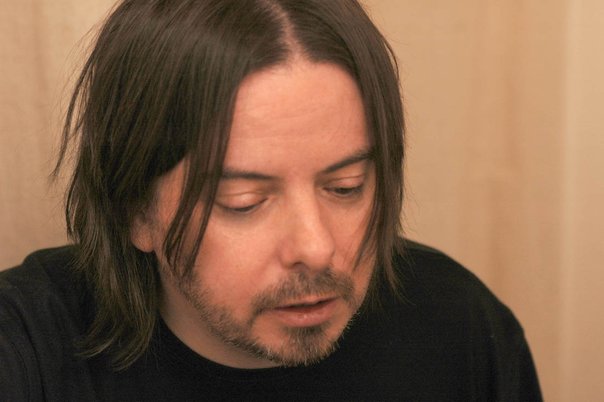
Daniel WylieThe last time Say It With Garage Flowers spoke to Glasgow singer-songwriter, Daniel Wylie, the former frontman of late ’90s / early noughties, Alan McGee-endorsed jangle-poppers, Cosmic Rough Riders, he was going into the studio to record his 2017 album Scenery For Dreamers, which showcased his love of heavy Neil Young and Crazy Horse-like electric guitars and the chiming Rickenbacker sound of The Byrds.

This year, he’s releasing a new record, Atoms and Energy, which is much more stripped-down than its predecessor. Neil Young is still an obvious influence, but it’s the Young of After The Goldrush and Only Love Can Break Your Heart, rather than Cortez The Killer.

“I wanted to make a completely different album from [2015’s] Chrome Cassettes and Scenery For Dreamers. Both of those had a similar approach and vibe to them and I felt it was time for a change,” he says.

“I wanted to write a classic ‘70s acoustic record, lyrically based around what was currently occupying my thoughts, and musically like my favourite ‘70s Neil Young, Crosby, Stills & Nash, Cat Stevens and James Taylor records. That was the plan and I think we pulled it off pretty well.”

Q&A

When and how was Atoms and Energy written and recorded?

Daniel Wylie: I always write my song ideas on an acoustic guitar. I write almost daily, and when it’s time to make an album, I go through hundreds of those ideas and try to choose 10 that have great melodies – some kind of lyrical spark that I can work from and that fit well together as a collection of songs.

Initially, the plan was to go in and record 10 acoustic songs over two days. Just two guitars, one lead vocal and one harmony, with a little bit of percussion, piano and harmonica on a couple of the songs. However, once I got into the studio [La Chunky in Glasgow]  and started recording, my co-producer Johnny Smillie, suggested that some songs deserved a bigger setting, so the record evolved into something else.

Who did you work with on the album?

DW: Neil Sturgeon, Johnny Smillie and Stu Kidd are guest musicians. They are all great writers and artists in their own right and having them on board makes it easy work. They fully understand what I’m looking for and they’re just great players and good people.

Did Covid-19 mess up your plans for the record? How did you cope with lockdown? 

DW: Covid-19 totally messed with recording. However, lockdown turned out to be a blessing and a curse. Basically, I had to stop recording the album. My good pal Neil Sturgeon, had recorded his acoustic guitar parts, Stu Kidd had recorded his percussion parts and I’d recorded the vocals.  Eventually, Johnny Smillie began to work on some arrangements for me, in an attempt to get the record finished, which turned out to be a real blessing. Otherwise, it’s likely the record would still be sitting unfinished.

‘I was really ill for a while, with a dodgy heart. How do you conceive a plan for dying?’

Johnny would go in alone, do some work on arrangements, send them over to me and I’d relay back my likes and dislikes and any changes I wanted made. There’s a spontaneity about being in the studio, like instant ideas get put into action, so some of that is missing.

There’s also the fact that you suddenly have too much time on your hands to over-analyse stuff. There’s a madness to it all. Cabin fever played its part in the final outcome.

The record often feels melancholy, reflective and nostalgic. All the songs are either about relationships or death, aren’t they? Is it a kind of concept album? If you don’t mind me asking, have you had a tough time of it during the past few years?

DW: I almost called the album Relationship Songs. I can’t deny that I’m getting older and I was really ill for a while, with a dodgy heart. How do you conceive a plan for dying? I just thought it was time for reflection on relationships with people, time and events that shaped my life. A little bit of sadness for the things I got wrong along the way, and my thoughts on important people and events that brought me to where I am as a person and as an artist.

‘Alan McGee and Poptones found me the audience that has allowed me to continue to make music’

Dealing with the death of my mum five years ago from cancer, and, career-wise, being in the right place at the right time to get signed by Alan McGee, and also the negative side of that, which is being surrounded by the wrong people.

Another positive was the association with McGee and [his label] Poptones, which found me the audience that has allowed me to continue to make music. It’s really an album about what life has given to you and what it hasn’t.

The first song, The Bruises and the Blood, deals with a dark subject matter – domestic violence. It’s quite a shocking and unnerving start to the album – although, in typical Daniel Wylie style you’ve managed to mix a dark and powerful lyric with a great pop tune and some Beach Boys-style harmonies / vocal arrangements. What can you tell me about that song?

DW: When we were young, my wife and I lived in a flat in Castlemilk housing estate in Glasgow, and our upstairs neighbours were always fighting. It was terrible. He would beat her up and throw her out on the landing, naked. We’d take her in and call the cops on him, but nothing was ever done and at that time, she was scared to leave him, as she had nowhere else to go.

I kind of had that in my head when I was writing the song. On the outside, their relationship looked normal, and that’s what they presented to the world, but behind closed doors, it was an atmosphere of bullying, control and violence against the woman. Thankfully, I know that she escaped the situation and moved on to a better relationship. The melody is at odds with the lyrics, in the same way as their presentation to the world was at odds with what was really going on in their relationship.

What about the song Heaven’s Waiting Room? It deals with childhood friends, moving on and getting older…

DW: That song is referencing how quickly our childhoods pass and how much we cram into those formative, carefree years, and how many of our clearest and fondest memories are attached to those times…before we’re forced to grow up. For those who believe in something after death, Earth is basically heaven’s waiting room. We’re all sitting on this planet waiting and wondering what’s next.

Are you a nostalgic person?

DW: Yes. The older I get, the more I look back, and the more I look back, the more I realise how lucky I’ve been to have lived through so many historical moments, great inventions, avoiding wars on my doorstep, all the great scientific, technical and medical advances, films, art… and especially music. To have walked this planet in the same lifespan as The Beatles, The Rolling Stones, The Kinks, The Byrds, The Beach Boys, R.E.M… How lucky is that?

How old are you? Do you worry about death and old age? Those themes crop up on the album a few times…

DW: I was born on January 2, 1959, so I’m 62. Death has occupied my thoughts since I was a child. It used to scare me, but as I get older, the inevitability of death is something I’ve come to terms with. I’ve noticed how younger generations come through and you no longer have anything much in common with them. Who wants to be here alone when all your friends have gone? There’s a line in my song Value Of Life, from the album, Enjoy The Melodic Sunshine: “while other people sleep, I lie awake and wonder why I’m here.” That was me singing about me worrying about death as a child, in my bed at night.


God is Nowhere, from the new album, is a song for atheists everywhere, isn’t it? You’re not a believer then? I love the fuzzy electric guitar sound on it it turns a sweet-sounding song into something more subversive. Was that the idea?

DW: I wrote it when I was angry. The lyric: “I said a begging prayer for your healing, but you still died,” is about my mother’s death. I’m not a believer in organised religion. I was brought up Catholic, but I knew I didn’t believe in all that, so I abandoned it. I do believe in a spiritual existence after death though, so I suppose I’m more of an agnostic rather than a complete atheist.

The song only has two chords. I tried to keep it to one chord, but the temptation to change got the better of me. I had the idea to try and make it sound like those late ‘60s/ early ‘70s Santana records, with Latin percussion and fuzz guitar. Johnny Smillie played the fuzz guitar, using a plectrum given to him by Carlos Santana, after a live show in which he used the plectrum to play with during the gig. How awesome is that?

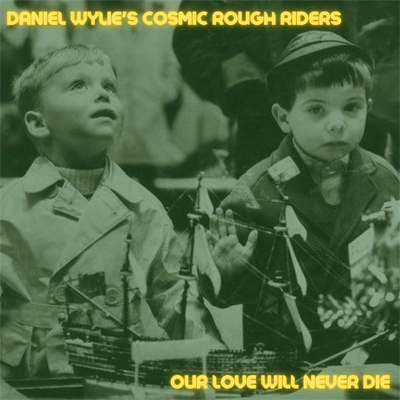
Our Love Will Never Die is one of the more positive songs on the album, isn’t? It’s beautiful – a simple, honest love song. Did you write it for your wife? It reminds me of vintage Neil Young, circa his After The Goldrush album – it’s very like Only Love Can Break Your Heart. Was that intentional?

DW: I have no problem admitting my wife is the greatest person I’ve ever known and, yes, it was written for her. When I wrote the song, I had to double-check the Neil Young song to make sure I hadn’t ripped him off. When Johnny Smillie heard my home demo, he did the same, but after doing that, he told me it just sounded like me. There was never any intention to write a Neil Young song. I think because I’m such a fan of certain people, their influence will occasionally shine through.

‘I do believe in a spiritual existence after death, so I suppose I’m more of an agnostic, rather than a complete atheist’

In a just world, Our Love Will Never Die would be the soundtrack to lots of wedding first dances, wouldn’t it?

DW: One of my earlier songs, That Was The Day, has proved to be a favourite wedding song for a bunch of couples over the years. Funnily enough, it was also written for my wife. So, yeah, I’d be happy if Our Love Will Never Die became a wedding staple.

In total contrast, Ruth The Truth is a dark and sinister song lyrically, that’s tangled up in a web of lies. Musically, I think it has echoes of early R.E.M. What inspired it?

DW: I have a history of throwing out songs with girls’ names in the title. This is just the latest. It’s a story about how stupid men are when it comes to a beautiful lady – the shallowness of men who think with their dicks and whose brains are in their balls. The album needed a little pop tune, and I chose this song because of its catchy chorus.

‘I’d be happy if Our Love Will Never Die became a wedding staple’

One of my favourite songs on the album is the last one, Saddle Up The Horses. It deals with childhood memories – playing cowboys. What can you tell me about it?

DW: Children are dreamers. I had the cowboy hat, the gun belt, the gun – the children’s cowboy outfit – and as a child, I was a big fan of westerns. Back then, little boys of that age would play cowboys and Indians. I think the song captures that childhood innocence – to the point where you can’t fathom how dangerous a gun is.

Atoms and Energy - Daniel Wylie

Did you have a happy childhood? The pictures on the album artwork are of you as a kid…

DW: I had a pretty happy childhood. My dad took the album sleeve photo when I was around 12 years old. I didn’t realise how poor we were at the time, but you can see the poverty in that photograph.

Despite being poor, my parents did their best to make sure we knew our way around all the local parks and museums. We had an occasional holiday down the Ayrshire coast to Saltcoats or Troon, and, most importantly for me, our home was filled with great music. My parents had amazing taste in music – it was an education in itself.

What are your plans for the rest of the year? Will be you making another album? How about a return to big guitars?

DW: I hope to begin recording again later in the year. I’ve chosen 10 songs for my next album and finished writing them last week. It’ll be a full-band album with hooky choruses, loud guitars and harmonies. It might be called Shane, after one of my all-time favourite cowboy films. I even have the photo for the sleeve picked out.

Have you written many new songs during lockdown?

DW: Honestly, hundreds. I have 12 albums’ worth of really good tunes.I need a big lottery win, so I can afford to record them all. Do you happen to have the winning numbers?

I’m lucky – I can pick up a guitar, strum a few chords and a tune will be there in my head. I don’t know how or why it happens, but I’m not complaining. I genuinely think it’s just a gift I’ve been given, but it’s not to be questioned or analysed. Life and death inspires me, so does other people’s music, and the weather and nature.

You’ve been working with English singer-songwriter Ian M Bailey. Earlier this year, he released a great EP of songs you’d co-written together, called Shots of Sun. Do you have more songs with him coming out? How did you hook up?

DW: Yes – as well as writing a whole bunch of new songs for myself, I’ve co-written 12 songs with Ian. Last year, he sent me a couple of his videos of songs he’d written during the initial lockdown period. I thought they were excellent and told him so.

He suggested we maybe write a song together and I had so many songs half-written that I knew I wasn’t going to be able to use, so I sent him four and he liked them all – a song turned into an EP. Ian added his parts to complete the songs and we were both so pleased with the results that we decided to keep going and do an album.

I send him unfinished songs, sometimes a good chorus with no verse, or a verse and a chorus with no bridge, and sometimes he’ll write the chorus, and he adds his bits and then he records them himself. He’s a producer and one-man band. We’ll likely keep the songwriting thing going.

I’ve also been co-writing with other people. There’s a double A-side single I’ve written with Amanda Louise Thompson for her band The Big Believe. That’s more guitar pop-oriented, like an indie Blondie or something, and will be released before the end of 2021.

What music – new and old – are you enjoying at the moment?

DW: Arlo Parks – Collapsed in Sunbeams;  Will Stratton – The Changing Wilderness;  Khruangbin & Leon Bridges – Texas Sun EP; Ray LaMontagne – Monovision; Fleet Foxes – Shore; The Milk And Honey Band – Songs From Truleigh Hill; The Chills – Scatterbrain; The Coral – Coral Island, and The Beatles – Esher Demos.

‘I do understand the convenience of streaming. Financially, though, something has to change. People need to eat’

The last time we spoke, you were anti-streaming – you told me you liked vinyl and CDs. Is that still the case?

DW: I love CDs and I love vinyl. I need the artwork with the music. I still don’t have Spotify, but I do understand the convenience of streaming. Financially, though, something has to change. People need to eat and need to be able to focus on creating the great music that the world loves. It costs money to do that.

Atoms And Energy is being released by Last Night From Glasgow records – they got their name from a line in the ABBA song Super Trouper. It’s on various formats. Green, yellow and black vinyl, CD and, eventually, the usual digital outlets.

At the end of this year, you’re reissuing the 2001 Cosmic Rough Riders compilation, Enjoy The Melodic Sunshine, on vinyl. It’s a compilation of material from your first two, self-funded, Cosmic Rough Riders albums, Deliverance and Panorama, plus a few other songs, and it was put out by Alan McGee’s Poptones label. What’s prompted the rerelease? It was a lot of people’s introduction to your music, wasn’t it?

DW: Ian Smith, from Last Night From Glasgow, asked me if I’d be up for reissuing it. I felt the time was right, so I said yes. There’s been a lot of interest in a vinyl reissue, so that’s what’s happening, and I’ve added I Call Her Name, to the end of side one. It’s from the same sessions and I always regretted not putting it on the original album. Enjoy The Melodic Sunshine sold over 100,000 copies when it was first released, but only 1,000 vinyl copies were pressed and they’ve been changing hands for silly money.

How do you feel about those songs now? What’s it like revisiting them?

DW: I had to listen to the master a couple of weeks ago – it’s the first time in years that I’ve heard it from start to finish, uninterrupted.

I really enjoyed listening to it again. It brought back some great memories of recording it with Stephen Fleming. I wrote the songs, but we did everything else as a team. We put everything we had into making sure it was as good as it could be and to my ears, it still sounds great. I’m so proud of it and how it changed my life. So now it’s coming out on some nice coloured vinyl: blue, orange, white, and black.

Do you have any regrets about Cosmic Rough Riders? Do you wish you’d been bigger?

DW: My main regret is using a band name and not just using my own name from the start. That way there would have been no confusion as to whose music it was. But, hey, I did come up with a great name that was worth using.

‘The celebrity thing freaks me out. Sometimes you have to get off the rollercoaster, before it kills you’

If Cosmic Rough Riders had been a bigger band, it would probably have changed my life too – or at least more than I was willing to give or accept. I was already becoming unrecognisable to myself. One time, I came home after a tour and my wife asked me to wash up some dishes. I said to her: “I don’t do dishes”. It sounds funny, but it was an indication that I was losing myself. When you have massive exposure on a show like Top of the Pops, things change. People treat you differently. It’s not like you suddenly have super powers or become a gifted brain surgeon who saves lives, but the celebrity thing freaks me out. Five minutes of it was enough for me. It’s always been about the music for me and I prefer being normal. Sometimes you have to get off the rollercoaster, before it kills you.

Finally, it’s 2021. Do we need a revolution in the summertime?

DW: Hah! People don’t get that song. It was written about a day I spent with some college friends in Glasgow’s Queen’s Park. The weather was super-sunny and the army had set up some kind of recruiting show in the park. I was thinking: ‘join the army? Or sit in the park, in the sunshine, with some beer, and watch our beautiful Scottish girls’. Stuff that for a revolution!

Atoms and Energy by Daniel Wylie’s Cosmic Rough Riders is available to pre-order on vinyl and CD from Last Night From Glasgow here. The physical albums will be officially released on July 2, but pre-orders will ship this month.

You can pre-order the reisssue of Enjoy The Melodic Sunshine on vinyl here.